
South Africa’s gap is no longer in policy, but in the systems meant to protect survivors
As global crises dominate headlines, from conflict and political instability to rising economic inequality, the language of human rights continues to feature prominently in public discourse.
Yet for many women and children, the most immediate threat to their human rights is far closer to home. It is violence experienced within relationships, homes, and communities.
In South Africa, gender-based violence remains one of the most pervasive human rights violations. While national statistics point to the scale of the crisis, they do not capture the deeper reality survivors face when seeking help: systems that are fragmented, under-resourced, and difficult to navigate.
Survivors of domestic and intimate partner violence often move between police stations, healthcare facilities, courts, and social services that operate in isolation from one another. At each step, they are required to recount their experiences, facing delays, disbelief, or bureaucratic indifference.
In this way, the very systems designed to deliver justice can become an additional burden.
The challenge is not only the prevalence of violence. It is the absence of integrated responses that recognise the complexity of survival. A survivor may require far more than legal intervention — including trauma counselling, safe accommodation, legal support, and long-term economic assistance.
When these services are disconnected, many survivors fall through the cracks.
South Africa has taken important steps in responding to gender-based violence. The crisis has been declared a national emergency, and the National Strategic Plan on Gender-Based Violence and Femicide (NSP-GBVF) provides a ten-year roadmap for change. Legislation establishing the National Council on GBVF has also been passed to strengthen coordination.
These are significant achievements, shaped by years of activism and advocacy.
However, policies alone do not produce safety.
Without adequate financing, coordination, and accountability, even progressive frameworks risk remaining symbolic rather than transformative. The gap South Africa faces today is not legislative it is institutional.
Human rights are not protected by laws alone. They depend on functioning systems: police services that respond effectively, courts that prioritise survivor safety, healthcare systems that provide trauma-informed care, and social services capable of supporting long-term recovery.
They also depend on civil society.
Across the country, community-based organisations play a critical role in supporting survivors. From shelters and counselling centres to court support services and advocacy groups, these organisations translate policy commitments into real, practical support.
Yet many operate under precarious and short-term funding conditions, even as demand for their services continues to grow. When these organisations are weakened, the consequences are immediate with survivors having fewer places to turn, and access to justice becomes harder to realise in practice.
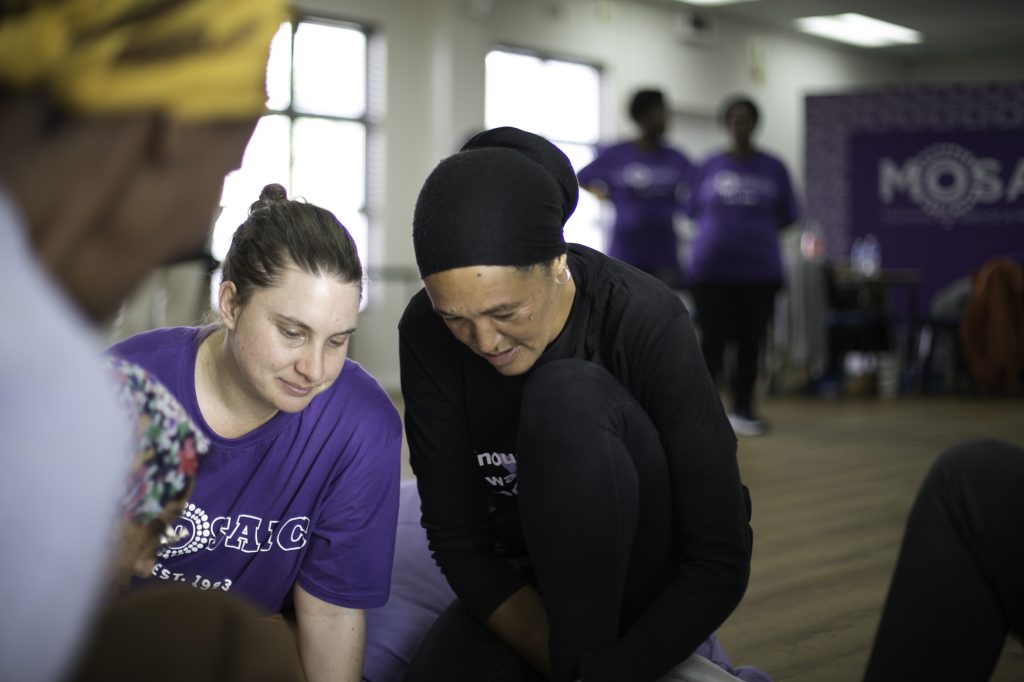
At MOSAIC Training, Service & Healing Centre, this challenge is addressed through a Continuum of Care approach. This model recognises that safety is not a single intervention, but a process requiring coordinated support over time.
A survivor may first access court support services to obtain a protection order. From there, she may be connected to counselling, legal accompaniment, parenting support, or programmes that strengthen economic independence. Each step is linked to the next, creating a pathway toward safety and recovery.
This approach reflects a simple principle: justice must be experienced, not merely promised.
However, scaling such models requires sustained political partnership. If human rights are to be realised in practice, the systems that protect them must be properly resourced and effectively coordinated.
Ultimately, the measure of human rights is not found in policy documents, but in lived experience.
It is measured in whether a woman seeking protection can access a court that listens. Whether a survivor can receive counselling without navigating systems she cannot afford. Whether a mother leaving an abusive relationship can rebuild safety and stability for herself and her children.
Until these conditions are consistently met, the promise of human rights remains incomplete.
Human Rights Month should therefore prompt a critical question: are South Africa’s systems truly designed for survivor safety, or has the country become fluent in the language of rights without delivering on their promise?
The answer will determine whether human rights remain an aspiration or become a lived reality for all.


